Trappist is not a style but a certification. To carry the Authentic Trappist Product hexagon, a beer must be brewed within the abbey or in its immediate vicinity, under the supervision of the monks, with profits directed to the community and to charity. Only a handful of breweries in the world qualify.
Trappist is not a beer style (like IPA or Stout). It is a protected origin designation, like Champagne or Parmesan cheese. It tells you where the beer was made (in a Trappist monastery) and who made it (Trappist monks), not exactly what it tastes like.
What makes a beer “Trappist”?
How it tastes.
- Appearance
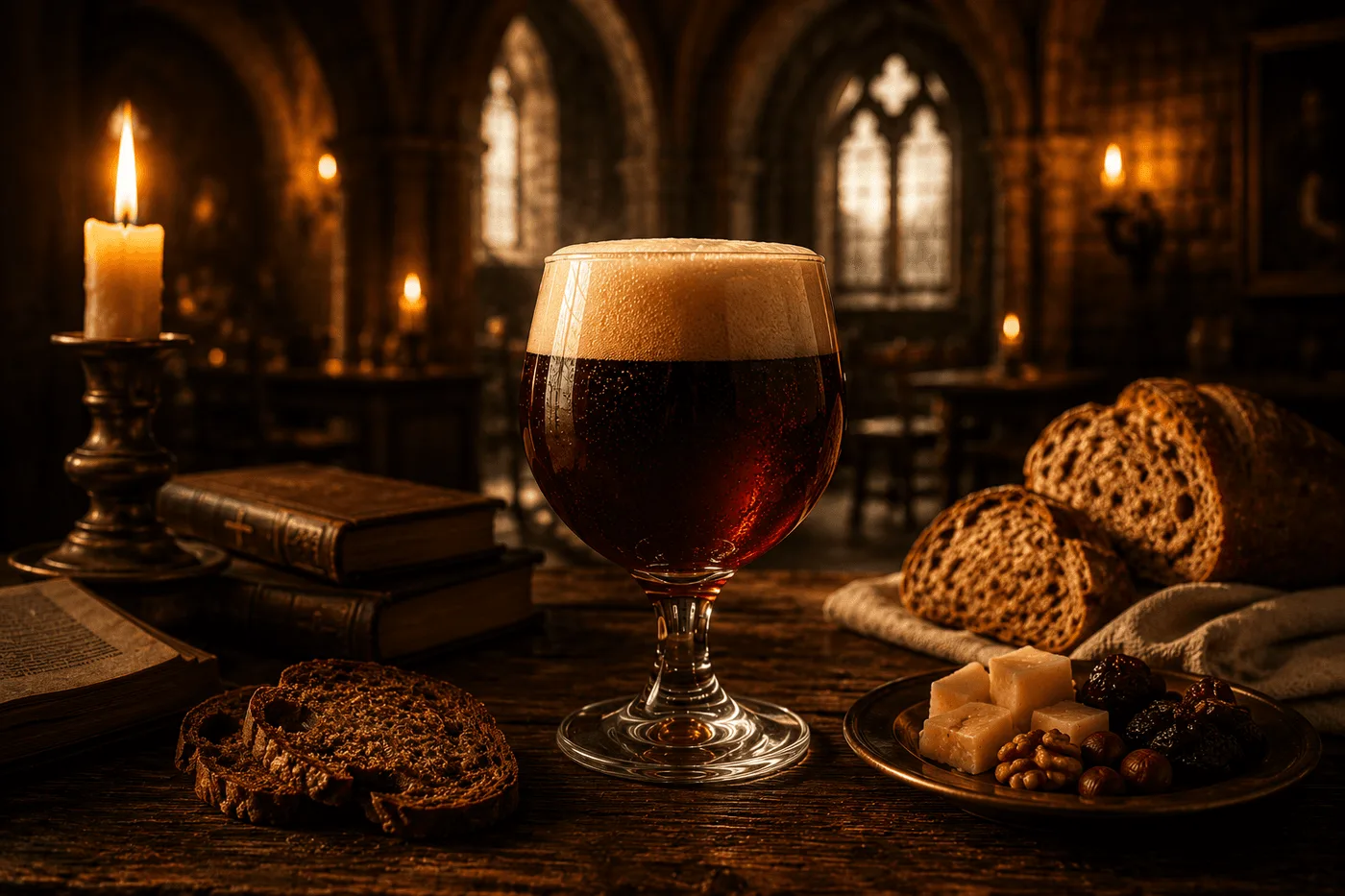
- Ranges from pale gold to deep mahogany across dubbels, tripels, and quadrupels.
- Aroma
- Dark fruit, caramel, spice, and a warming complexity in the stronger ales.
- Palate
- Rich and layered, balanced by a dry finish and high carbonation.
- Finish
- Warming, long, and contemplative.
How to serve.
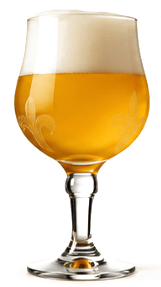 The Tulip · 8-12°C
Most Trappist ales suit a wide chalice or goblet, served around 10 to 14 degrees so their malt complexity can open up. Orval is the exception, evolving for years in the bottle thanks to its unique dry-hopping and Brettanomyces.
History & tradition.
Trappist monks have brewed since the 19th century, originally to support their abbeys and fund charitable works. The five Belgian Trappist breweries (Westmalle, Chimay, Orval, Rochefort, and Westvleteren) are joined by a small number abroad. Westmalle effectively invented the modern Tripel in 1934; Westvleteren 12 is regularly called one of the best beers in the world. These are beers made not for profit but for purpose.
Trappist Beer to try.
Westmalle TripelAbdij der Trappisten van Westmalle9.5% ABV$$$$Chimay White (Cinq Cents)Abbaye de Scourmont8% ABV$$$$La Trappe TripelDe Koningshoeven8% ABV$$$$ Chimay Gold (Dorée)Abbaye de Scourmont4.8% ABV$$$$Westmalle ExtraAbdij der Trappisten van Westmalle4.8% ABV$$$$Westvleteren BlondSint-Sixtusabdij Westvleteren5.8% ABV$$$$Westvleteren 12Sint-Sixtusabdij Westvleteren10.2% ABV$$$$
 Westvleteren 8Sint-Sixtusabdij Westvleteren8% ABV$$$$
The breweries.
Trappist vs. Abbey beer.
This is the most common confusion for beginners.
A legally protected term. Must be brewed at a specific Trappist abbey, or in its immediate vicinity, under monk supervision.
Examples: Westmalle Tripel, Chimay Blue, OrvalA broader category. These beers maintain a connection to an abbey (historical or existing) but are usually brewed by commercial breweries under license. They are often excellent and stylistically identical to Trappist beers, but they lack the "ATP" logo.
Examples: Leffe Blonde, Grimbergen Blonde, Maredsous 10, St. Bernardus Abt 12Lost legends: defunct & former Trappist breweries.
The Trappist commitment to quality is absolute, but their brewing operations are subject to the same pressures as any other entity: aging monastic populations, economic viability, and war. When a monastery can no longer supervise brewing or decides it distracts from their spiritual life, they cease production or lose their official status.
The first and only certified Trappist brewery in the US (opened 2013). Despite brewing decent beers like Spencer Trappist Ale and an Imperial Stout, the monks deemed the operation financially unsustainable in the hyper-competitive American craft beer market.
Achel did not close, but it ceased to be "Trappist". The last monks moved to Westmalle in 2021, ending the monastic supervision required for the ATP label. The beer is still brewed (now as "Achel 8" etc.) but is officially an Abbey beer.
Austria's only Trappist brewery, known for unique beers using local honey (Gregorius, Benno). In 2023, the abbey announced the closure of the brewery due to immense economic pressure and the shrinking monastic community's inability to manage it.
A tragic loss to war. The abbey brewery was destroyed by bombardment in WWI and never rebuilt. Since 2011, they sell a "Trappist" beer (Mont des Cats), but it lacks the ATP logo because it is brewed at Chimay (Scourmont Abbey) rather than on-site.
Common Trappist Beer styles.
- Color
- Dark / Brown
- ABV
- 6-7.6%
- Flavor
- Caramel, dark fruit, gentle spice.
- Origin
- Westmalle defined the modern form.
- Color
- Golden / Pale
- ABV
- 7.5-9.5%
- Flavor
- Pear, citrus, soft spice, dry finish.
- Origin
- Westmalle, "the mother of all Tripels".
- Color
- Deep Dark
- ABV
- 10%+
- Flavor
- Raisin, fig, port, warming depth.
- Origin
- La Trappe coined the name.
How to drink it.
Frequently asked.
Most Trappist abbeys are closed to the public to preserve the monks’ contemplative life. A few run a visitor cafe nearby (Westmalle, Orval, Chimay), but you generally cannot tour the brewery itself.