A legacy brewed in time
The centuries-old traditions that shaped Belgian brewing culture, from silent monastery cellars to the farmhouse fields of Wallonia.
The monastic roots
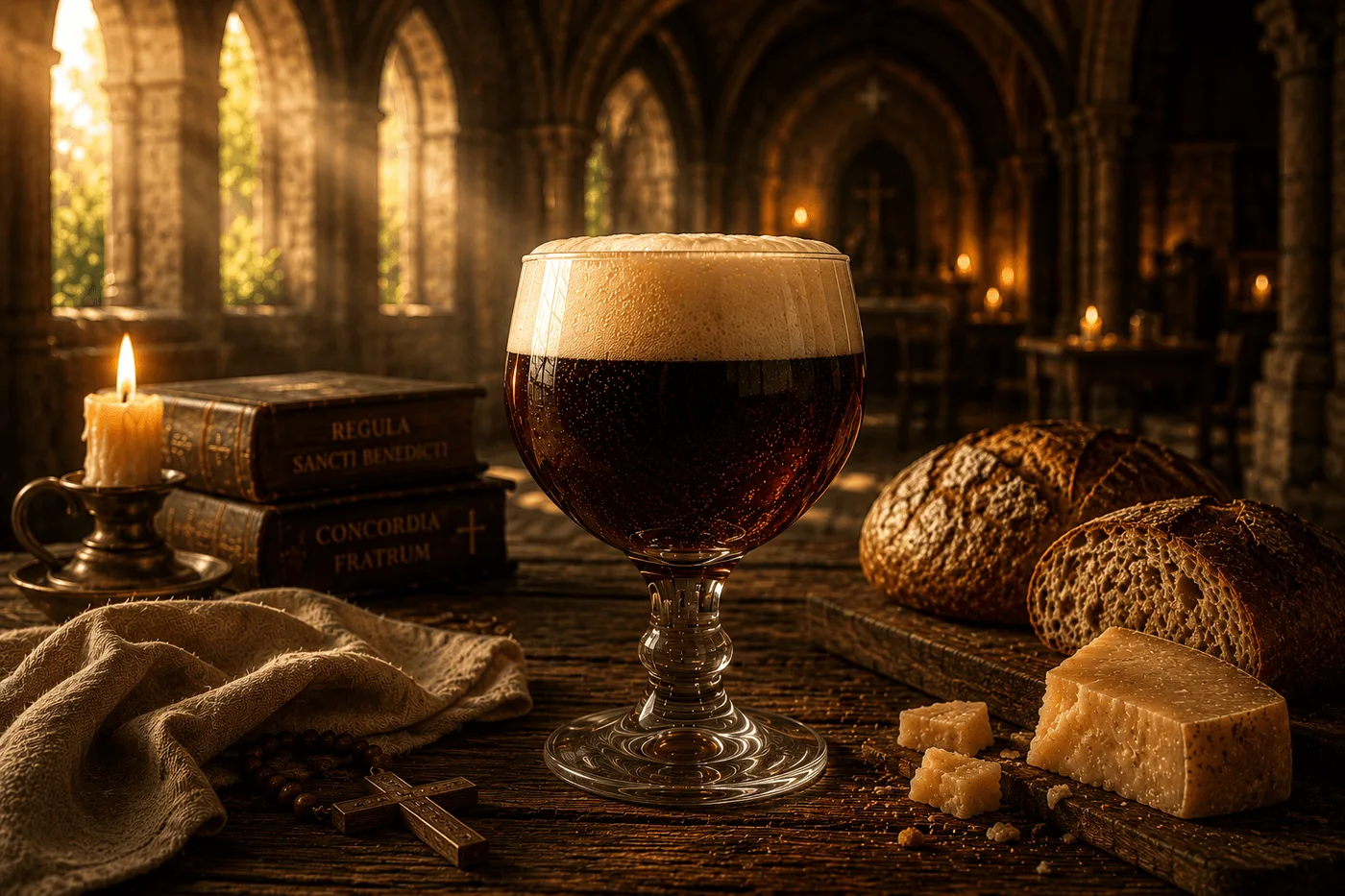
The story of Belgian beer is inseparable from the church. In the Middle Ages, monasteries were centres of knowledge, agriculture, and hospitality, and brewing did three jobs at once: it fed the community, it welcomed the guest at the gate, and it paid for both.
You will often read that monks brewed because beer was safer than the water. That is a legend, and it is worth knowing whose. Saint Arnold of Soissons, born around 1040 at Tiegem in Flanders, was a soldier who became a hermit, then an abbot, then a bishop, and who retired to found the abbey of Saint Peter at Oudenburg in West Flanders, where he brewed. He is the patron saint of Belgian brewers and hop-pickers, and his feast day is 14 August. The tale attached to him is that during an epidemic he told his people to drink the monastery's beer rather than the water, and they lived.
It is a good story and it is not evidence. His own hagiography calls it a miracle tale, and the identical miracle is told of another brewers' saint, Arnulf of Metz, four centuries earlier. Historians of the medieval diet find no general fear of water either: people drank it routinely, judged it by its source, and the health manuals of the day recommended it. What survives the correction is smaller and more interesting than the myth. Not that beer was safer, but that a Flemish abbot who brewed became the patron saint of the people who still do.
This tradition evolved into the legendary Trappist ales we know today. Strict rules still govern these beers: they must be brewed within the monastery walls or in the immediate vicinity of the abbey, under the supervision of the monks, with profits supporting the community or charitable causes.
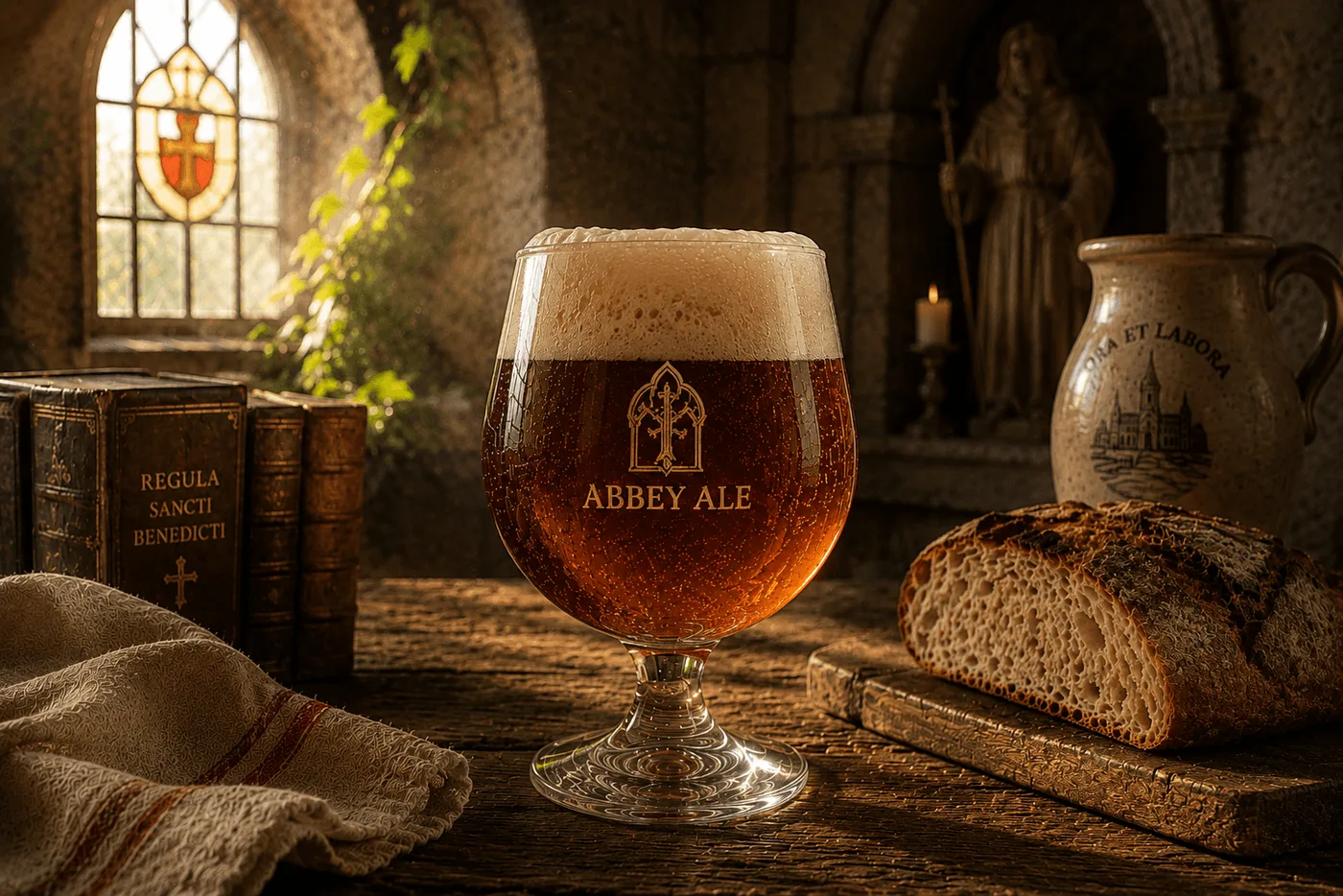 "Ora et Labora", Pray and Work
Milestones in brewing history
Westmalle's First Trappist Beer
The monks of Westmalle brewed their first commercially available ale, laying the foundation for what would become the Trappist designation. It marked a turning point in monastic brewing.
The farmhouse tradition
While monks brewed in silence, farmers in Wallonia brewed with the seasons. Saison (French for "season") was born out of necessity.
Brewed during the cold winter months to prevent spoilage, these beers were stored until summer to quench the thirst of seasonal workers ("saisonniers") in the fields. They were rustic, dry, and often spiced with whatever was available on the farm.
The core traditions that define Belgian beer
Belgian beer is a culture shaped by unique brewing techniques and deep-rooted social rituals. These traditions give it an unparalleled diversity and a distinctive character.
Unlike traditions that minimise yeast character to emphasise malt and hops, Belgian styles celebrate the complex esters (pear, banana, apple) and phenols (clove, pepper, smoke) produced by their unique strains.
"The Belgian brewer’s art lies as much in managing the fermentation as in the selection of grains and hops." Randy Mosher, Tasting Beer