

FRUIT LAMBIC
Lindemans Framboise
Brouwerij Lindemans

Brouwerij Timmermans • Flemish Brabant Belgium
Peach-infused lambic with gentle sweetness and soft acidity. Light-bodied, aromatic, and easy-drinking.
Tart, fruity and vibrant, with notes of peach, sweet, candy, finishing rich and sweet.
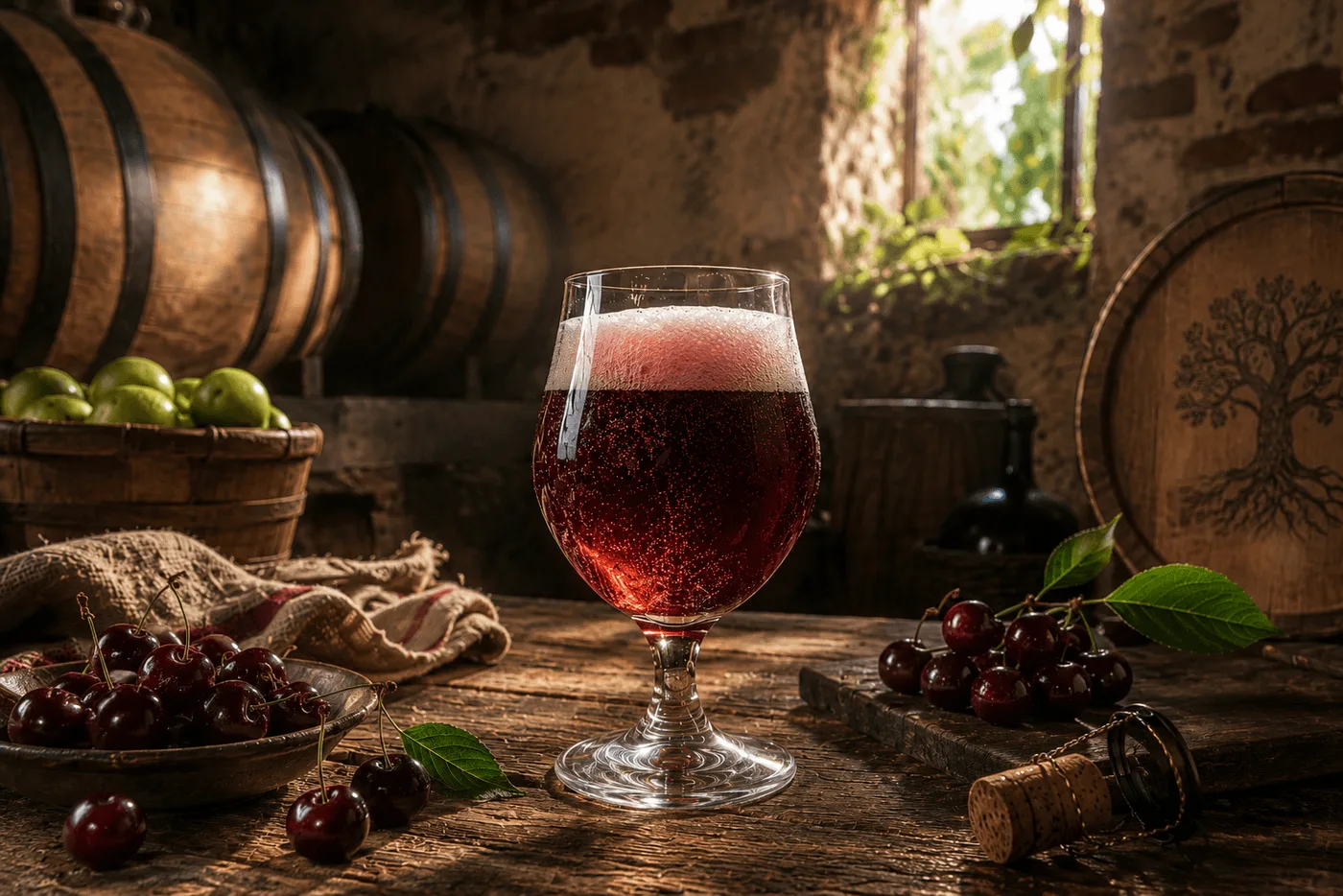
Serve at 6-8°C in a lambic glass to maintain a generous head and let the aromas bloom.
6-8°C
Style-based profile from ABV, style & tasting notes.
Ages for years. Oak-aged and acidic, it deepens and mellows over a decade or more.
"Pairs with vanilla ice cream or peach tarts for a cohesive fruit-forward dessert."
Cook this: a dark Belgian chocolate tart or speculoos, or a cherry or raspberry tart.
Special Occasion
Rare or strong, worth the hunt.
Peach-infused lambic with gentle sweetness and soft acidity. Light-bodied, aromatic, and easy-drinking.
Timmermans traces its lambic brewing to 1702, among the oldest continuously operating lambic breweries. The peach version reflects the house's fruit-forward, approachable style.
On the Fruit Lambic style, Lambic base fermented with whole fruit (cherries, raspberries, etc.). Can range from sweet and dessert-like to dry and tart depending on the producer.
Explore the Fruit Lambic guide Source: BeerAdvocateA slender, tapered glass that shows off the bright effervescence and tart, funky bouquet of spontaneously-fermented lambics, gueuze and fruit ales.
Serve well-chilled
Cool tempers the sharp acidity
Pour gently
Preserve the champagne-like bead
Keep a lacy collar
A thin head carries the funk
Sip slowly
Let the sourness unfold on the palate
No reviews yet
Community ratings will appear here. In the meantime, see what drinkers say on:
Brouwerij Lindemans
Brouwerij Lindemans
Brouwerij Boon
Pour it into a lambic glass, served around 6-8°C, and let its aromatics open before the first sip. Patience rewards this one: a few years in the cellar will round it into something deeper.
Brother Anselm, cellarmaster
Did you know?
Many Belgian beers referment in the bottle, creating natural carbonation and complex flavors.
Why it tastes differentThe Monk's Dispatch
One letter a month from our cellar: a beer worth seeking, a brewery worth knowing, a small lesson in the art. What is this?