
WITBIER
Hoegaarden
Brouwerij van Hoegaarden

Anheuser-Busch InBev • Flemish Brabant (Leuven) Belgium
A classic Belgian pilsner. Crisp, clean, and refreshing with a distinct floral hop aroma and a dry finish.
Characterful and well-balanced, with notes of crisp, malty, grassy hop, with a balanced, moreish finish.
Serve at 3-5°C in a pilsner flute to maintain a generous head and let the aromas bloom.
3-5°C
Style-based profile from ABV, style & tasting notes.
Drink fresh. Hop aroma fades fast; enjoy it young and vibrant.
"Perfect with salty fried foods like Belgian fries (frites) or calamari, as the carbonation cuts through the grease."
Cook this: frites with andalouse, or cheese croquettes (kaaskroketten).
Everyday
Easy to find, easy on the wallet.
A classic Belgian pilsner. Crisp, clean, and refreshing with a distinct floral hop aroma and a dry finish.
Brewed in Leuven, where the Den Hoorn brewery's roots reach back to 1366. Stella Artois launched in 1926 as a Christmas beer, 'Stella' for the star, and grew into Belgium's best-known international lager.
On the Pilsner style, A crisp, clean, and refreshing bottom-fermented lager. Features a distinct hop bitterness and dry finish. The most popular style worldwide.
Explore the Pilsner guide Source: RateBeer
A tall, slender flute that drives a steady stream of bubbles upward, locks in carbonation and frames the brilliant gold clarity of a crisp pilsner.
Serve ice-cold
Crispness lives in the chill
Pour down the centre
Build a tight, white head
Keep it lively
The flute protects the carbonation
Drink fresh
Pilsner rewards the first pour
No reviews yet
Community ratings will appear here. In the meantime, see what drinkers say on:
Brouwerij van Hoegaarden
Brouwerij St. Bernardus
Duvel Moortgat
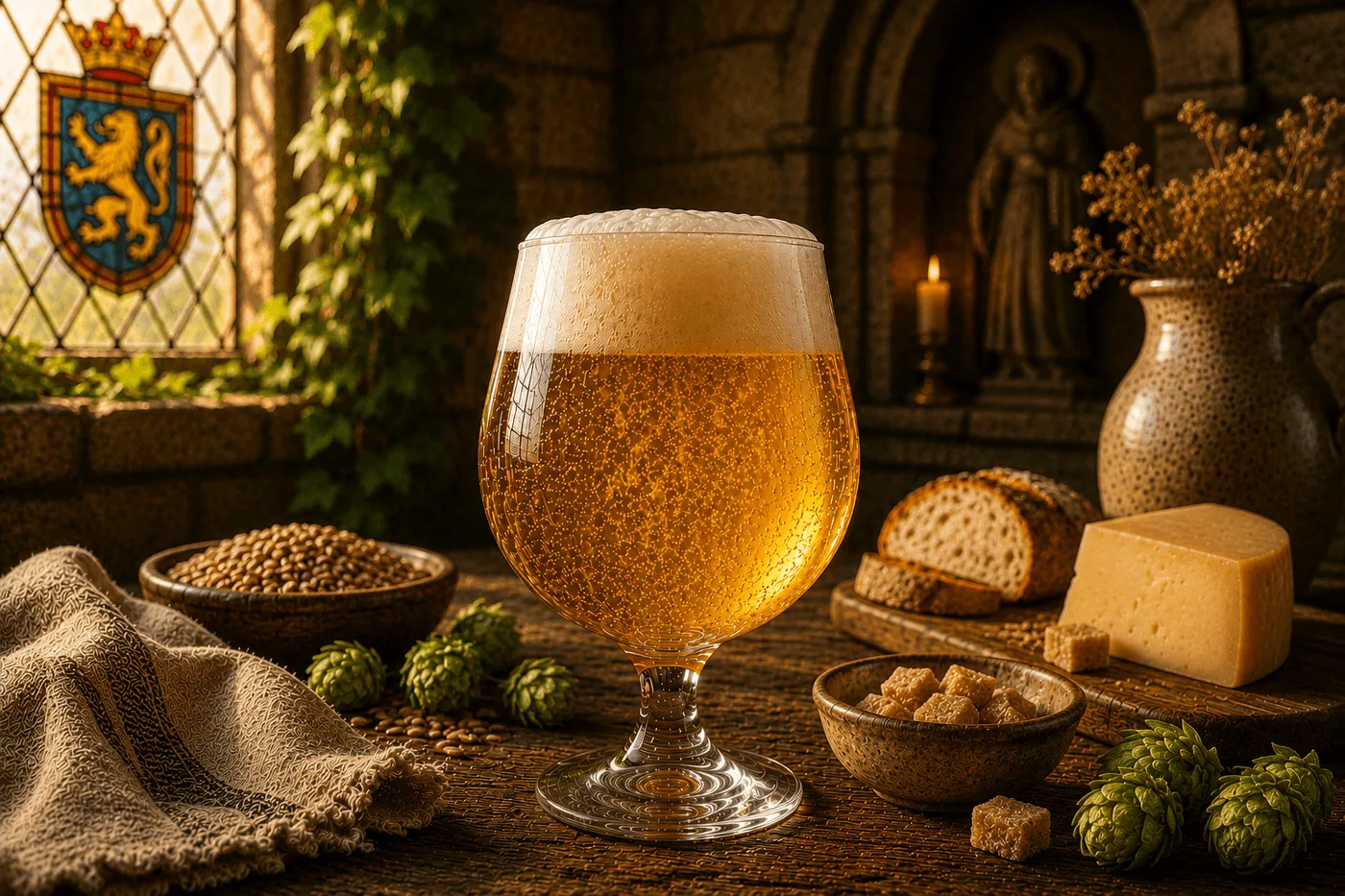
Pour it into a pilsner flute, served around 3-5°C, and let its aromatics open before the first sip. Enjoy it fresh and lively; there is little to gain from waiting.
Brother Anselm, cellarmaster
Did you know?
Many Belgian beers referment in the bottle, creating natural carbonation and complex flavors.
Why it tastes differentThe Monk's Dispatch
One letter a month from our cellar: a beer worth seeking, a brewery worth knowing, a small lesson in the art. What is this?