About Belgian beer
No country treats beer with the seriousness, variety, and reverence of Belgium. Here, beer is not a commodity but a craft, recognised by UNESCO as part of the nation’s living cultural heritage.
A thousand years of brewing
Belgian brewing traces back to the medieval abbeys, where monks brewed safe, nourishing beer for themselves and for travellers. Over centuries, this monastic knowledge spread to farmhouses and town breweries, each developing its own yeasts, recipes, and rituals.
What survived is a brewing culture of extraordinary diversity. A small country of eleven million people sustains hundreds of breweries and well over a thousand distinct beers, from delicate witbiers to powerful quadrupels.
Diversity above all
There is no single Belgian beer. The defining trait of the tradition is its refusal to standardise. A Belgian brewer prizes character over consistency: the fruity esters of an open fermentation, the funk of wild yeast, the warming depth of dark candi sugar.
This is why Belgian beer rewards curiosity. Each style is a doorway, and behind it sits centuries of accumulated craft.
Beer as ritual
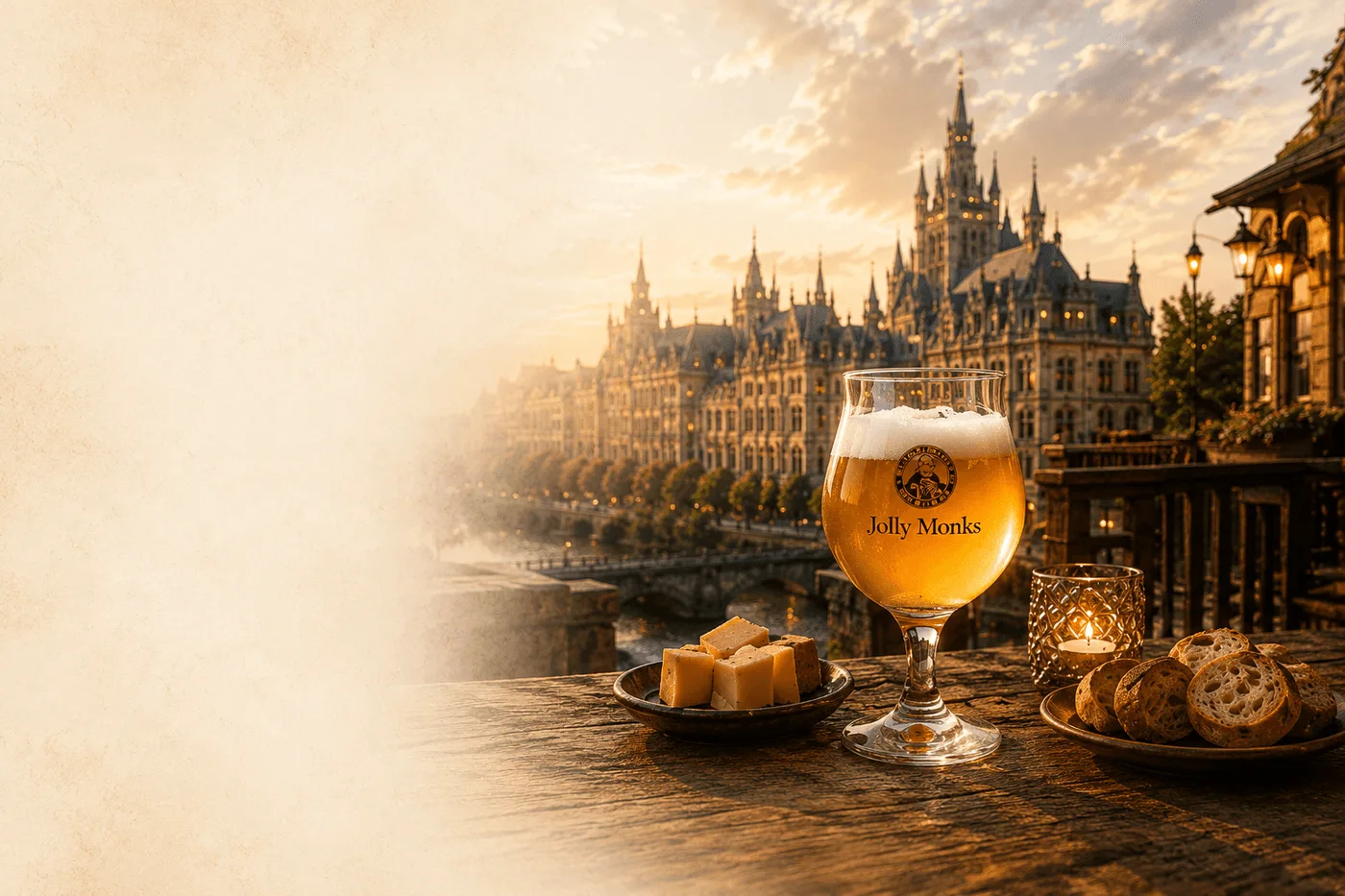
In Belgium, how you drink matters as much as what you drink. Every beer has its own branded glass, its own serving temperature, its own way of being poured. A café will refuse to serve a beer in the wrong glass.
This is not pretension. The glass shapes the aroma, the head, and the experience. To drink Belgian beer properly is to take part in a ritual refined over generations.